



A plea from Beti Williams MBE, Patron of Technocamps
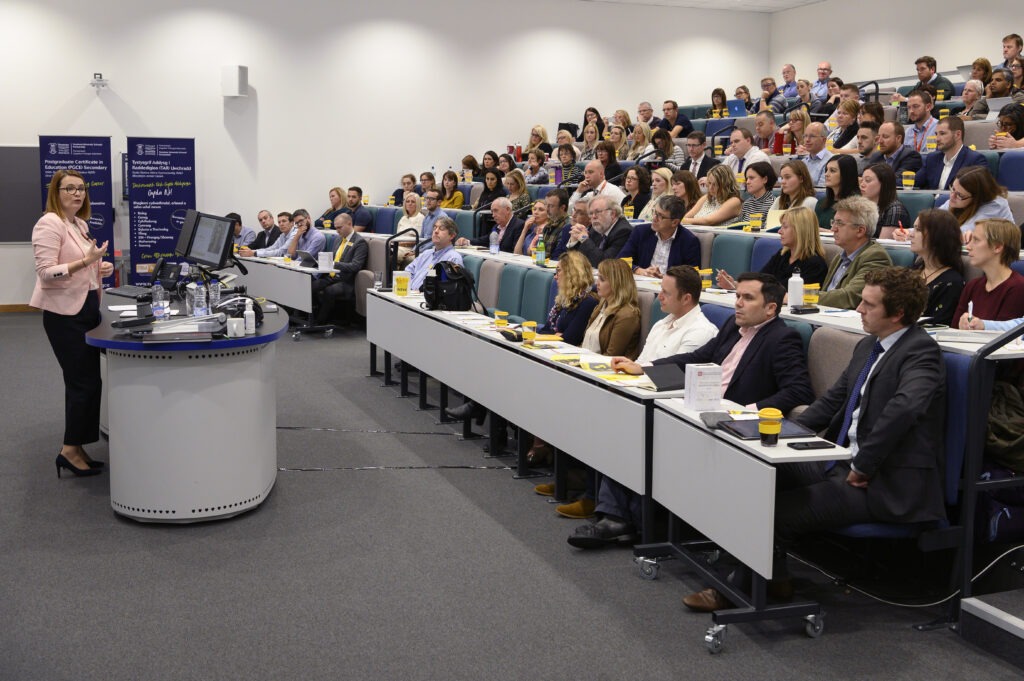
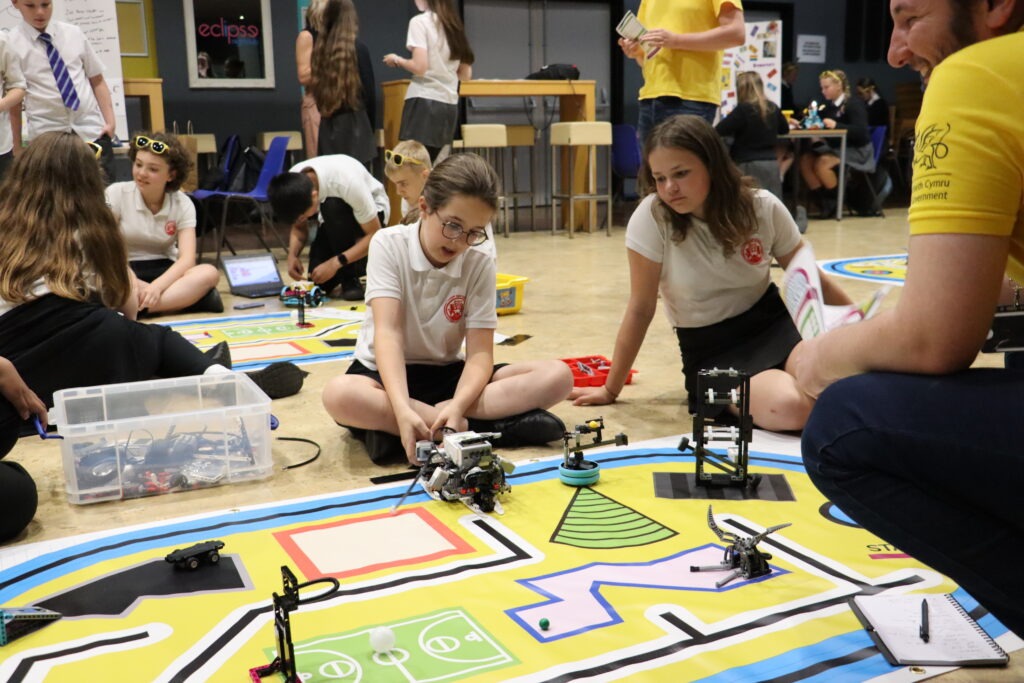
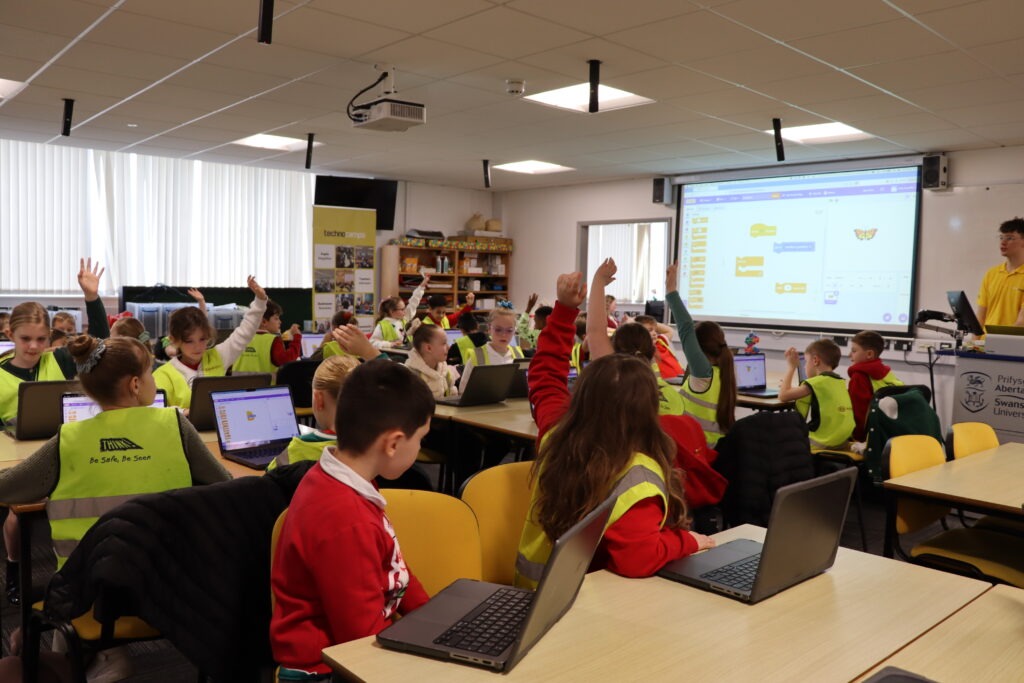
Over the past ten years, the Welsh Government has provided modest funds for the Welsh universities to run the Technocamps programme, which employs Delivery Officers in the universities to provide direct, in-person, bilingual training and support to all teachers in Wales (900 teachers each year); and to deliver workshops for the young people in their classrooms (30,000 children each year). The training and support provided to the teachers enable them to overcome the challenges they face with the changing nature of digital technology education; and the workshops enthuse the children about digital technology and wider STEM subjects, as well as provide their teachers with inspiration and guidance in delivering novel digital technology education.
Inexplicably, the Cabinet Secretary for Education has now taken the conscious decision to stop funding the Technocamps programme, and instead offer what amounts to twice as much funding per annum to a company based at the University of York to replace the Technocamps in-person, bespoke, bilingual support with this English company’s on-line resources.
As Patron of Technocamps – and a staunch supporter of Wales and Welsh institutions – I consider this decision to be outrageous. I have thus started a petition to Welsh Government to reconsider the decision to stop funding Technocamps – a decision that will mark the end of Technocamps’ in-person training, workshops, and bespoke local support. I urge you to read this petition and – if you agree with its sentiment – to sign it; and then bring this petition to the attention of your wider network, for example parents and local business leaders.
The formal petition includes only the bare details outlining the salient issues. A fuller account of the situation and argument is included in this newsletter.
Beyond signing the petition, I would also urge you to write to your local Senedd Member, and your local education authorities, expressing your concerns about this decision by the Cabinet Secretary for Education. In your letter, feel free to reiterate any information expressed in the following that resonates with you.
Many thanks for your support!
Beti Williams MBE
Patron of Technocamps
View or download Beti’s update and newsletter in PDF format.
Technocamps – Its Origin and Ethos
The Computer Science Departments in the Welsh universities have a long history of collaborating on outreach, starting with the creation of the ITWales business engagement programme in 1993. Recognising serious shortcomings in computing education in schools, we established Technocamps in 2003 as an ITWales school outreach programme to promote and support computing education in Welsh schools, with all of its resources and delivery provided in both English and in Welsh.
Since 2014, the Welsh Government – specifically, the Department for Education and Skills (DfES) – has provided modest funding to sustain the Technocamps programme. Year on year, DfES acknowledged the impact that Technocamps has had on Welsh schools, particularly with its in-person teacher training and support for all teachers in all schools across Wales, which has been seen as crucial for teachers to overcome the new challenges they continuously face with the ever-changing digital landscape.
Throughout the past ten years, Technocamps has concentrated its efforts on supporting the various projects and initiatives that were at the forefront of Welsh Government thinking. For example,
- When the Digital Competence Framework (DCF) was introduced, Technocamps targeted every secondary school with a grand ambition to deliver 3 hours of workshops in each of them over an 18-month period, in order to embed the ethos and understanding of the DCF. By the end of the 18 months, it had delivered an average of 9.8 hours of workshops in 97% of all Welsh secondary schools, and generated an extensive backlog of requests for further visits and support.
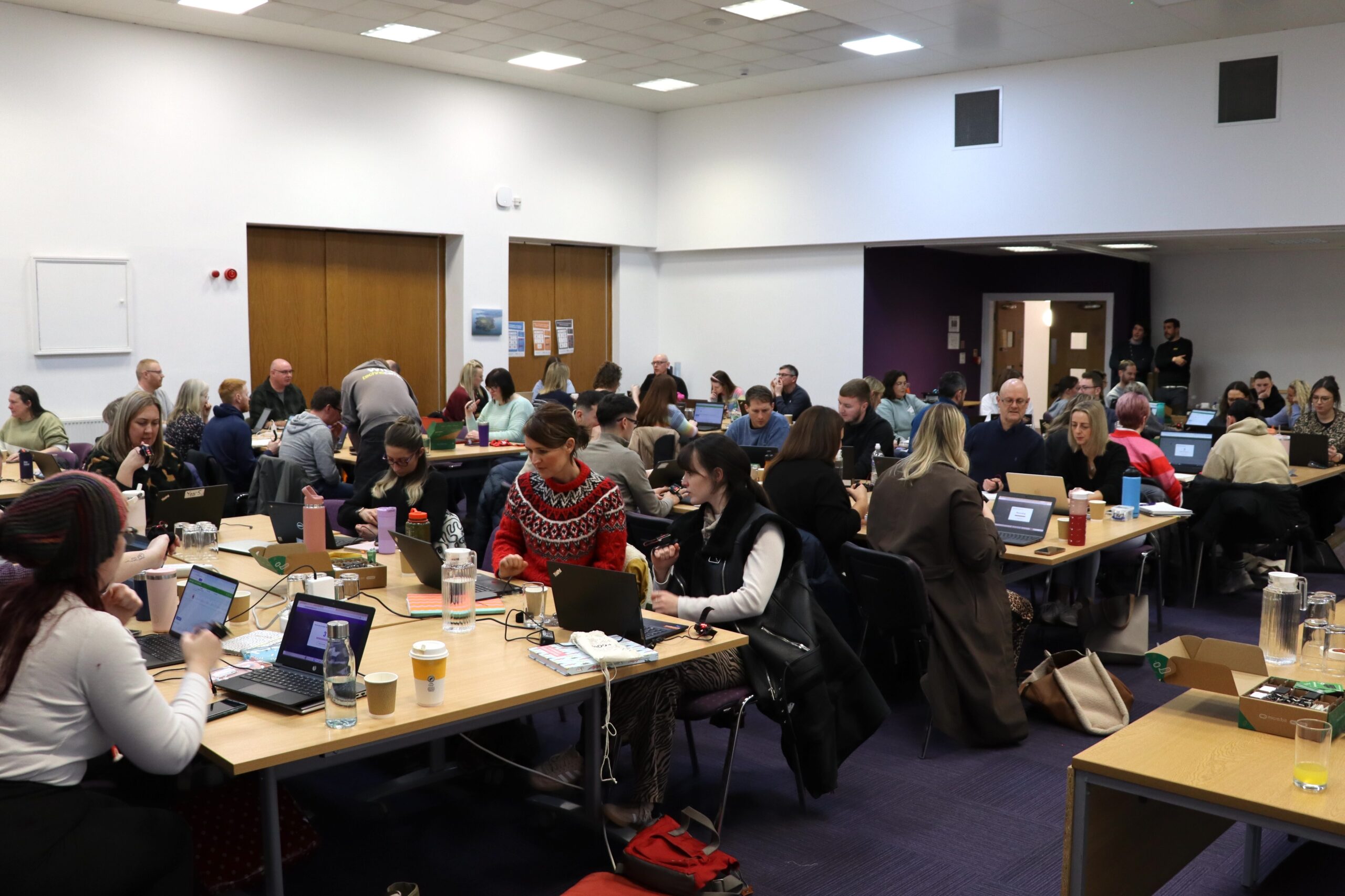
- When the new Curriculum for Wales introduced Computer Science as a full subject within the Science and Technology AoLE, Technocamps went into overdrive to ensure that all schools and relevant teachers were prepared to embed the subject into their local curriculum, and in particular by providing extensive training for the teachers responsible for delivering the subject.
- When new GCSE and A-level qualifications in Digital Technology were introduced, Technocamps started a massive programme of teacher training, providing extensive professional development opportunities to 208 teachers who struggled with the transition from the existing ICT curriculum to that for the digital technology qualifications.
- When DfES provided their backing for the Minecraft initiative, Technocamps established 5 Minecraft Learning Centres across the university hubs; and developed and delivered a series of 9-week training courses for teachers: the first covering the basics of implementing the tool in the classroom, and the latter covering more advanced programming concepts which can be taught using the in-game features.
- When DfES encouraged schools to engage with the BBC micro:bit NextGen programme, Technocamps developed workshops which embedded the use of these devices for each of the six AoLEs, and provided full-day training workshops in all regions of Wales which was attended by 176 teachers.
What is clear is that Technocamps has always offered itself as the vehicle for delivering the initiatives proposed or promoted by DfES. Drawing on the expertise of the universities, Technocamps is always able and eager to respond in a reactive manner to develop and deliver training sessions and workshops that align with changing DfES priorities.
If not Technocamps, then what?
In contrast to the direct, in-person, bespoke, bilingual training, support and guidance provided by Technocamps, there are many organisations throughout the UK that offer teacher support (for digital education) by providing on-line resources. However, many different research studies have shown that this is wholly ineffective outside large metropolises that enjoy a critical mass of competent teachers and role models.
For example, a 62-page report by NESTA[1], which assessed the offerings and impact of 66 such organisations notes that they “amplify existing inequalities and hierarchies rather than empower more people”, and that “regions other than London and the Northwest are proportionally very undersupplied for the number of young people living there.” This is reinforced specifically for Wales in a 20-page research paper[2] that contrasts the benefits of the Technocamps engagement model with the deficiencies of the CAS model (which is based on offerings of encouragement and on-line resources) in measuring impact.
In a recent national survey[3] of teachers who received Technocamps training this past year, of the 152 teachers across Wales that responded, 94% rated the training as either “Essential” (69%) or “Important” (25%); and 87% indicated that they knew of no other organisation besides Technocamps that they could look to for support; only 13% could identify such alternative support, but only referred to on-line resources such as BBCTeach and the micro:bit website.
Without a nation-wide, in-person, dedicated, bespoke, bilingual offering as provided by Technocamps, Wales would inevitably suffer from the inequalities and hierarchies identified by the NESTA research.
The End of Technocamps (Funding)
In light of the close relationship that Technocamps has with DfES, in particular through redefining its mission and targets each year to align with DfES priorities and ambitions, it is astonishing that the new Cabinet Secretary for Education has consciously decided to stop funding Technocamps, thus ending the crucial support that schools and teachers across Wales have come to rely on in order to succeed in the face of the ever-changing challenges thrown up by digital technology and curriculum reform.
Before the current Cabinet Secretary for Education took up this role last year, every Welsh Minister of Education and Skills has been very vocal about the strength and impact of Technocamps, and has regularly visited Technocamps workshops and attended Technocamps events. However, since taking up the role last year, the current Education Minister has declined various invitations to attend Technocamps events and to meet to discuss the Technocamps programme. She ought to be aware of Technocamps activities and impact through the quarterly reports provided to her department; but unlike her predecessors, she has at no time recognised nor acknowledged this.
The Replacement for Technocamps
The Cabinet Secretary for Education has recently announced £44M in grant funding within the Curriculum for Wales Grant Support Programme. With this, she took the conscious decision to not provide funding for the Technocamps programme to support digital education. To replace the funding for the Welsh universities to provide direct, bespoke, in-school, bilingual support for digital education, she has provided a £1.4M grant to the University of York to fund STEM Learning, their commercial operation which supports STEM teachers through the provision of on-line resources.
To my mind, this is a staggeringly bad decision: both in terms of the loss of critical in-depth bespoke support for teachers in Wales; and in terms of the disrespect it demonstrates towards Wales, and Welsh universities that are eager to support their local schools but are having their funding for this effort taken away and given – in far greater amounts – to an English university.
This support in fact already exists: the STEM Learning website is open to all, meaning its resources are already available to Welsh teachers. However, Wales suffers more than most regions in the UK from the problems noted above of communities lacking critical mass, so these resources have been of little to no benefit. Furthermore, being tailored for schools in England, STEM Learning has the English curriculum at its base, and will not have the solid grasp and embedding of the Curriculum for Wales that Technocamps enjoys.
This £1.4M grant is for support running to March 2028, which equates to £560,000 per annum; this is approximately twice the level of funding that Technocamps has received from DfES each year. It is also worth noting that, unlike Technocamps, STEM Learning is a commercial operation; the most recent financial statement for STEM Learning[4] filed with Companies House records a profit of £3,626,000 in 2024.
Besides the obvious objectionable points above, there are very many practical problems with relying on an English provider rather than Technocamps. For example,
- I do not believe that an organisation that is not based in Wales would understand the need – nor commit – to support every school with their own curriculum design which recommends “Practitioners use their own understanding of the school’s local area and awareness of the changing issues and challenges in each context to help them to be creative in embedding these contexts in learning and teaching.” This is a key component of Technocamps’ offerings, which is naturally provided by having each school served by a Technocamps hub situated in its local community (its local university).
- With Welsh government promoting the use of AI by teachers – and for many it being an overwhelming tool to adopt – I do not believe that an organisation from outside of Wales would be suitably able to inform Welsh teachers of deeply relevant considerations surrounding it; for example, how the data used to train these AI tools is inherently biased against the Welsh Language and Welsh culture, as it has been traditionally less visible on the internet as a relatively minor language and culture present in the modern world. Again, this is a key aspect of Technocamps’ popular training on AI tools.
I suspect and fear that consideration of such issues have not been part of the Cabinet Secretary’s decision-making.
It’s Worse: STEM – and Wales – Under Attack
The Curriculum for Wales Grant Support Programme aims to support all six Areas of Learning and Experience (AoLEs). However, only two grants were awarded within the Science and Technology AoLE: £1.8M to the (London-based) Institute of Physics, and £1.4M to (York-based) STEM Learning. Apart from the fact that these are both England-based organisations (there are many worthwhile Wales-based programmes other than Technocamps that are losing out), this means a total of just 7% of the funding in this programme goes towards supporting the Science and Technology AoLE; 93% of the funding goes to support the five other AoLEs.
Ensuring excellence and achievement within the Science and Technology AoLE is critical for delivering prosperity and securing the economic future of Wales, by underpinning the skills needed for a high-value skilled workforce. However, it is well recognised that this AoLE struggles – far more than others – in attracting and retaining competent teachers. The decision by the Cabinet Secretary to provide so very little support for the Science and Technology AoLE – and particularly computing and digital technology – is frightening and inexplicable, as it can only lead to a decline in attainment in digital and STEM subjects, and ultimately in economic prosperity.
[1] https://www.nesta.org.uk/report/young-digital-makers
[2] A university-based model for supporting computer science curriculum reform. Journal of Computers in Education 5(4):415-434, 2018.
[3] (Physical) computing in schools: The ongoing case for practitioner support. Proceedings of CEP 2026: Computing Education Practice.
[4] https://find-and-update.company-information.service.gov.uk/company/05081097/filing-history